Renal cortex section of Mgme1-/- mice showing signs of sclerosis (asterisks) and immune infiltration (arrows).
Ribonucleotides in Mitochondrial DNA and Inflammation
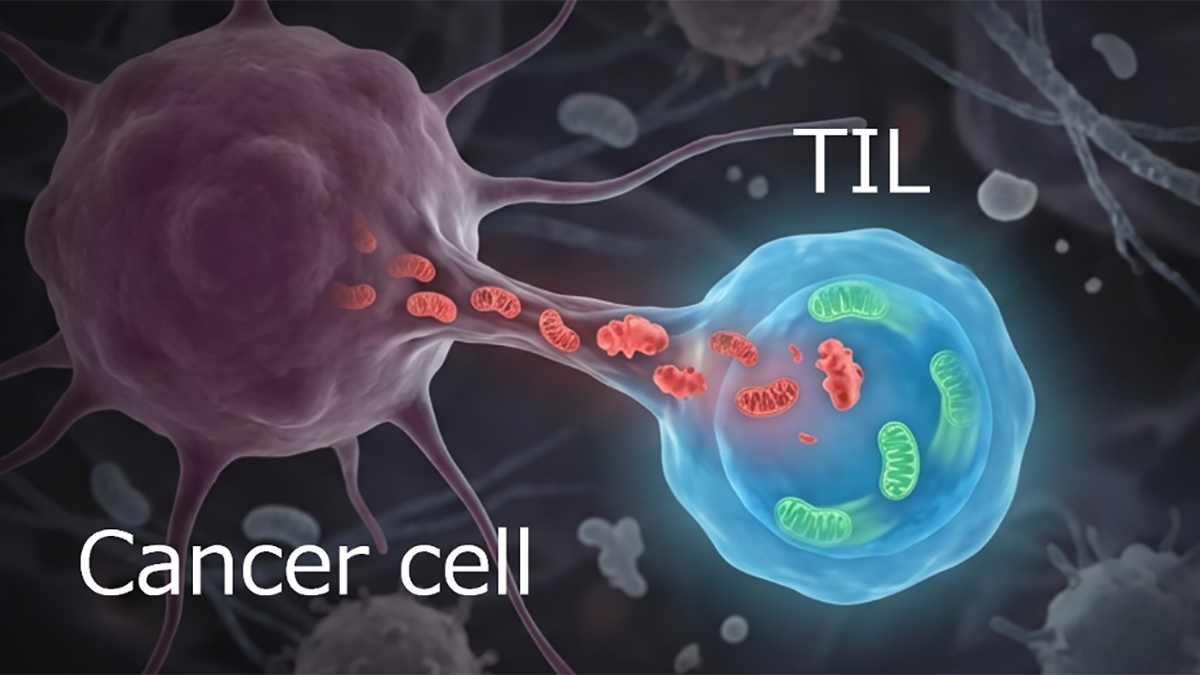
Recently, a multi-institute team led by Thomas Langer, PhD, at the Max-Planck-Institute for Biology of Ageing examined the effects on ribonucleotide incorporation into mitochondrial (mt)DNA on inflammation. Published in Nature, the study found that increased incorporation of ribonucleotides into mtDNA during replication resulted in the release of mtDNA fragments into the cytosol and an increase in inflammation.
Mitochondria are now recognized as far more than just producers of ATP. They have many critical activities, and disruption of those functions is associated with inflammation, cell death, and disease. Dr. Langer´s team previously showed that disturbances in the nucleotide metabolism result in the release of mtDNA into the cytosol and, like pathogenic DNA, the mtDNA elicits an inflammatory response by the cell. Now they found that this is caused by an increased incorporation of ribonucleotides into mtDNA. The incorporation of ribonucleotides is a problem for mitochondria because they lack the enzyme that removes those molecules from DNA.
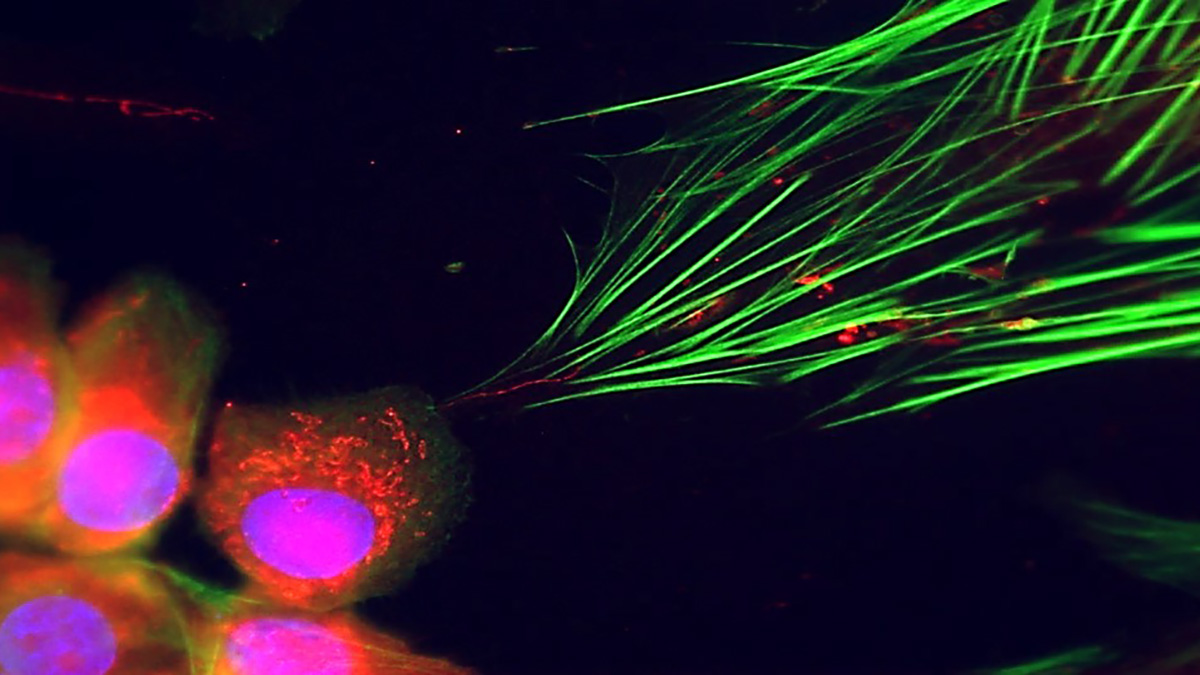
More specifically, they looked at mice that lacked MGME1, a mitochondrial exonuclease that maintains mtDNA, and observed increased ribonucleotide incorporation into mtDNA. Similarly, cells lacking the mitochondrial protease YME1L or senescent cells that have decreased deoxynucleotide levels accumulate ribonucleotides in their mtDNA. As a result, mtDNA leaks into the cytosol, and induces an inflammatory senescence-associated secretory phenotype, which can be reduced by adding deoxyribonucleosides.
Based on these findings, they conclude that throwing nucleotide metabolism out of balance leads to incorporation of ribonucleotides into mtDNA and age- and mtDNA-dependent inflammatory responses and SASP in senescence. The study results provide clues to several diseases, such as renal failure, systemic lupus erythematosus, cancers, and neurodegenerative diseases
A Conversation with Dr. Langer
MitoWorld: What are the likely next steps to continue this research?
Langer: This work can be taken in many different directions. Since we observe the incorporation of ribonucleotides into mtDNA in aged tissues and in senescent cells, it will be of interest to better understand the relevance of this phenomenon for the increased chronic inflammation with age. Which cells are predominantly affected and vulnerable to metabolic disturbances inducing mtDNA-dependent inflammation? From a mechanistic angle, we would like to understand better how replication stress ultimately lead to the release of mtDNA into the cytosol.
MitoWorld: Detection of double-stranded DNAs in the cytosol is a key feature of the innate immune system, but the leaking mtDNA fragments in senescent cells seems to be an “oversight” of evolution. Is this another example of the problems we face with living longer now?
Langer: The accumulation of ribonucleotides in mtDNA in aged tissues may indeed suggest that this problem worsens with age and, in this sense, it may contribute to problems associated with long life. However, we should keep in mind that mtDNA-driven inflammation is not necessarily always bad, as it was shown previously in models for mitochondrial disease that low rates of mtDNA release can prime cells and tissues to better respond to viral inflammation.
MitoWorld: Your finding that mtDNA fragments accumulate in senescent cells is intriguing, especially given that so many diseases of aging (especially neurodegenerative disease) feature inflammation. Could you expand on that idea?
Langer: A cell-cycle arrest and inhibition of nuclear DNA replication is a hallmark of senescent cells that therefore reduce the synthesis of deoxynucleotides, the building blocks of DNA. However, mtDNA replication still occurs in senescent cells (i.e., in the presence of low deoxynucleotide levels). This leads to increased ribonucleotide incorporation into mtDNA and inflammatory SASP. Indeed, this response is detrimental in many diseases settings, stimulating intense efforts to identify senolytics to selectively remove senescent cells from tissues. Our findings suggest that rebalancing the nucleotide metabolism helps to suppress the SASP, which therefore might represent an alternative approach for the treatment of at least some aging associated diseases.
MitoWorld: Can you speculate on how your findings might be translated into potential treatments beyond simply treating the inflammation?
Langer: Although it remains speculative at this point, it is an attractive possibility to use deoxynucleoside therapy to restore the nucleotide balance and to alleviate inflammation in autoimmune diseases or in ageing. Just recently, the FDA has approved a nucleoside therapy for thymidine kinase 2 deficiency, a rare mitochondrial disorder affecting children.
MitoWorld: How did you come to be interested in mitochondria in the first place?
Langer: Mitochondria are in many ways fascinating organelles. They are dynamic and very heterogeneous in different cells and tissues, reflecting their diverse functions. I originally studied protein folding and turnover in bacteria and then got interested in mitochondrial proteins and only realized with time that these processes often drive adaptative responses of mitochondria that are so important to understand their role in aging and disease. The fascination never stops!
Reference
Bahat A, Milenkovic D, Cors E, Barnett M, Niftullayev S, Katsalifis A, Schwill M, Kirschner P, MacVicar T, Giavalisco P, Jenninger L, Clausen AR, Paupe V, Prudent J, Larsson N-J, Rogg M, Schell C, Muylaert O, Larsson E, Nolte H, Falkenberg M, Langer L (2025) Ribonucleotide incorporation into mitochondrial DNA drives inflammation. Nature 24: 1-9.