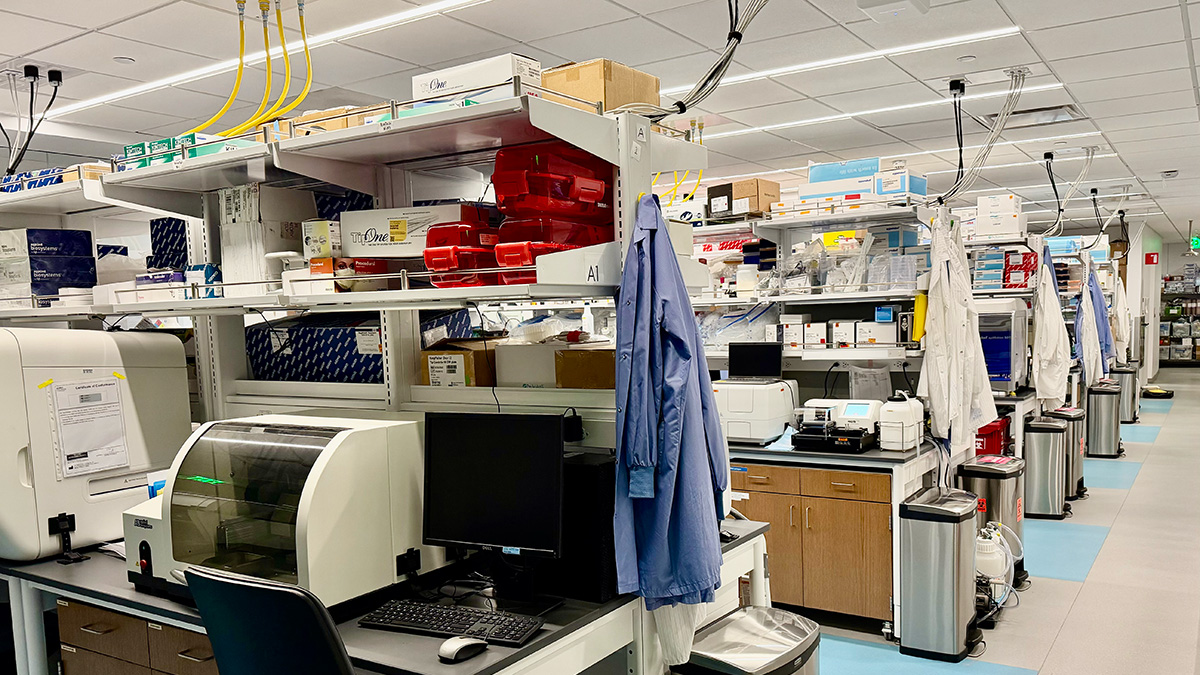
Disruptions in the human biome can cause serious problems. Unfortunately, disorders associated with small intestinal bacterial overgrowth, intestinal methanogen overgrowth, and intestinal sulfide overproduction are not well defined. A research team led by Mark Pimentel sought to bring more clarity to these disorders. The study was recently published in mSystems.
Mitochondria and Intestinal Flora and Fauna
The importance of human biome to our overall health is well-established. Disruptions in the flora and fauna of the human gut can cause serious problems. The most common of these is irritable bowel syndrome (IBS), but the associated disorders of small intestinal bacterial overgrowth (SIBO), intestinal methanogen overgrowth (IMO), and intestinal sulfide overproduction (ISO) are associated with IBS. Patients with these conditions have higher levels of breath hydrogen sulfide or methane, and higher bacterial colony counts, but they are not well defined.
A study led by Mark Pimentel and Juliana de Freitas Germano sought to bring more clarity to these disorders. The study was recently published in mSystems. The team examined gene transcriptomics of biopsies from several different groups. The groups included the small bowel of patients with IMO, ISO, and SIBO and from rats who were gavaged with bacteria that produce hydrogen sulfide.
Interestingly, each condition yielded unique results. For example, the genes linked to H₂S toxicity (e.g., electron transport chain and redox balance genes) of ISO patients were significantly affected, but the gene expression patterns of those with IMO and SIBO were affected much less. Results from the rat studies were similar to the ISO findings (e.g., dysregulation of mitochondrial respiration, redox balance, water homeostasis, immune response, and gut motility). Similar gavages with non-sulfide bacteria had no effect.
This study offers new insights into these disorders. The findings suggest that ISO symptoms are associated with bacterial H2S effects. Furthermore, it emphasizes the need for therapeutic strategies targeted specifically to each condition.
A Statement of Significance by Dr. Pimentel:
Our transcriptomic profiling study of small bowel biopsies revealed potential mechanisms underlying the pathophysiology of ISO, IMO, and SIBO and suggested that these are three distinct gut disorders that should be treated differently, with special attention to ISO and its broad effects on gene expression.
A Conversation with Dr. Pimentel:
MitoWorld: Can you give us an idea of how you will continue with this line of research?
Dr. Pimentel: We have expanded our use of omics techniques to better understand alterations in the small bowel ecology and environment associated with SIBO, IMO, and ISO, to improve not only diagnosis but also treatment.
MitoWorld: H2S controls an amazing array of activities. The involvement of mitochondria in its regulation is yet another aspect of cell biology moderated by these organelles. Were you surprised by this connection?
Dr. Pimentel Even though we know that H2S affects mitochondria, we wanted to explore whether this could be identified by classifying groups based on their H2S levels in exhaled breath. We were surprised that changes in mitochondrial biological processes, such as those related to mitochondrial ATP synthesis, were already happening at 1.5 ppm of H2S.
MitoWorld: Do you have any idea of what causes the dysregulation of the organisms that cause these disorders?
Dr. Pimentel: Dysregulation of organisms causing ISO, IMO, and SIBO can occur when the intestine loses its ability to clear them. In many patients, that loss begins after an episode of food poisoning, which triggers an autoimmune response in the gut’s motility system. Once gut motility is impaired, these organisms can persist or thrive where they shouldn’t, leading to ISO, IMO, and/or SIBO.
MitoWorld: You noted that further studies with larger sample sizes might identify the more important genes that are affected. Do you have any leading candidates?
Dr. Pimentel: I will focus specifically on ISO (no co-occurrence of SIBO and/or IMO) since it showed broad changes in gene expression. We analyzed small bowel transcriptomics from subjects with a minimum of 1.5 ppm but below 2.0 ppm of exhaled H2S (n=16) and those with ≥ 2.0 ppm of exhaled H2S (n=12), separately. When comparing these groups against subjects without ISO/SIBO/IMO (n=19), both comparisons showed, for example, downregulation in SLC7A11, which is involved in redox balance and ferroptosis regulation, and IL1B, which encodes a proinflammatory cytokine. When these H2S groups were combined (n=28), these changes were still there and more significant. Also, we identified dysregulation of several mitochondrial-associated genes, upregulation of CYP1A1 (redox balance), downregulation of CTH (endogenous H2S production), and upregulation of SST (gut motility and pain) in one of the H2S subgroups and in the combined group comparisons. Thus, we strongly believe that further studies with larger sample sizes will continue to show redox balance-, endogenous H2S production-, gut motility and pain- and mitochondrial-associated mechanisms and genes as important findings in ISO, independent of SIBO and/or IMO.
MitoWorld: Are there any interactions among the various sulfide, methanogenic, and other organisms that might complicate the situation?
Dr. Pimentel: In terms of transcriptomics, most differentially expressed genes and significant changes were found in ISO when combined with SIBO and/or IMO. These findings may suggest that interactions among the organisms associated with these different disorders are affecting the small bowel tissue more deeply. In other words, most changes were found in ISO, and we believe this is the leading cause of alterations in gene expression; however, these alterations can be intensified when co-occurring with SIBO and/or IMO. We haven’t proved that hypothesis in this manuscript, but this is within the scope of our future investigations.
MitoWorld: Do you see any clinical applications of your findings, and might you follow up on those?
Dr. Pimentel: Our findings demonstrate that SIBO, IMO, and ISO are distinct disorders that should be managed differently in clinical practice. The most pronounced transcriptomic alterations were observed in ISO, which is also usually associated with greater symptom severity, including diarrhea and urgency. These findings may contribute to the development of targeted or combination therapies for small bowel disorders, representing an important direction for future research.
Reference
de Freitas Germano J, Leite G, Villanueva-Millan MJ, Brimberry D, Rashid M, Hosseini A, Flor D, Bogatyrev S, Morales W, Weitsman S, Sanchez M, … Pimentel M (2026) Transcriptomics profiles in intestinal sulfide overproduction, small intestinal bacterial overgrowth, and intestinal methanogen overgrowth. mSystems 11: e00458-26.