Inflammation contributes to many human disorders of aging, including cardiovascular disease, cancer, and neurodegenerative disease. Mitochondria are known to encourage inflammation through the release of mitochondrial DNA and RNA, which can activate innate immune pathways. Now a research team at the Mayo Clinic, led by Peter Adams and João Passos, have discovered a new pathway that controls inflammation. The study was published in Nature.
Mitochondria and the Control of Senescence
Inflammation contributes to many human disorders of aging, including cardiovascular disease, cancer, and neurodegenerative disease. One important source of this inflammation is cellular senescence, a state in which cells permanently stop dividing but remain metabolically active. As senescent cells accumulate with age, they release a complex mixture of inflammatory molecules known collectively as the senescence-associated secretory phenotype, or SASP. Mitochondria, the organelles best known for generating cellular energy, have emerged as important regulators of this inflammatory response. Previous work has shown that mitochondrial dysfunction can promote inflammation through the release of mitochondrial DNA and RNA, which can activate innate immune pathways. But mitochondria do more than generate energy or inflammatory signals: they are also metabolic hubs capable of influencing how genes in the nucleus are switched on and off.
Now a research team led by Peter Adams at Sanford Burnham Prebys and João Passos at the Mayo Clinic, have discovered a new pathway that controls inflammation and may point to new treatments. The study, published in Nature, identifies mitochondrial citrate metabolism and acetyl-CoA production as important regulators of the SASP and suggests new possibilities for suppressing harmful age-related inflammation without necessarily eliminating senescent cells.
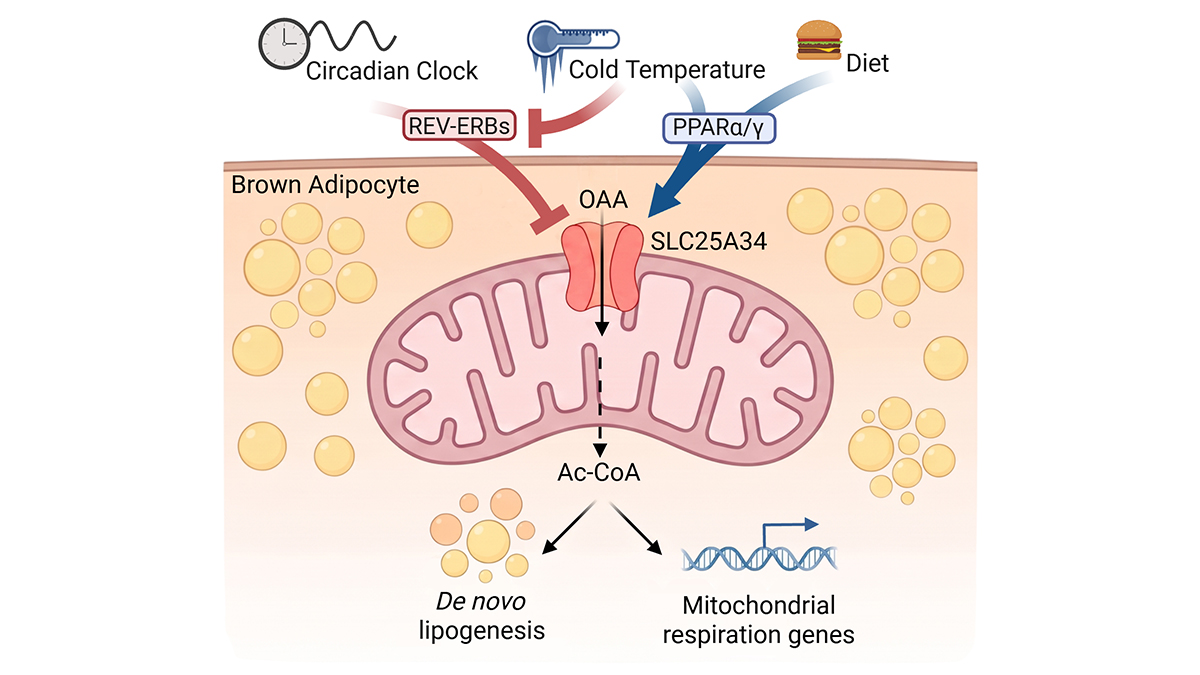
The researchers used a combination of genetic, metabolic and pharmacological approaches to uncover how mitochondria regulate the inflammatory phenotype of senescent cells. They found that senescence increases the export of citrate from mitochondria through the mitochondrial citrate carrier SLC25A1. Once in the cytosol, citrate is used to generate acetyl-CoA, an important metabolite that also serves as a substrate for histone acetylation. This increased availability of acetyl-CoA alters chromatin at SASP-associated genes, promoting their expression and the production of inflammatory factors. By genetically or pharmacologically disrupting this mitochondrial citrate-acetyl-CoA pathway, the researchers were able to reduce the inflammatory features of senescent cells, establishing a direct link between mitochondrial metabolism, epigenetic regulation and the SASP.
The study adds significantly to our understanding of cellular senescence by revealing how changes in mitochondrial metabolism can directly influence the epigenetic regulation of inflammatory genes. The findings establish an important connection between mitochondrial function, metabolism and the inflammatory signals produced by senescent cells. They also suggest a new strategy for targeting the harmful effects of senescence. Rather than eliminating senescent cells altogether, it may be possible to suppress their inflammatory activity by targeting the metabolic and epigenetic pathways that drive it. Such an approach could potentially reduce the detrimental effects of senescent cells while preserving some of their beneficial functions.
A Statement of Significance by Dr. Passos
Our study reveals a previously unrecognized link between mitochondrial metabolism and the epigenetic control of cellular senescence. We show that changes in mitochondrial citrate metabolism influence the availability of acetyl-CoA, which in turn regulates chromatin and the expression of inflammatory genes associated with the senescence-associated secretory phenotype. These findings demonstrate that mitochondria can shape the inflammatory state of senescent cells not only through classical stress-signaling pathways, but also by providing metabolites that directly influence nuclear gene regulation. Importantly, this work suggests that targeting mitochondrial metabolism may provide a way to suppress the harmful inflammatory effects of senescent cells, opening new possibilities for interventions aimed at age-related inflammation and disease.
A Conversation with Dr. Passos
MitoWorld: This paper is a significant advance to understanding senescence. Can you give us an idea of what direction your research might take to further this work?
Dr. Passos: One of the major questions for us now is how broadly this mechanism operates. Senescence is a very heterogeneous phenotype, it differs between cell types, tissues and even depending on what initially causes the cell to become senescent. We would like to understand whether this mitochondrial citrate–acetyl-CoA axis is a general feature of senescence or whether it is particularly important in specific contexts.
MitoWorld: In the Discussion, you pose the question of whether the two pathways work in tandem or independently. As you note, your results (Fig. 5) point to the latter. Do you have any other ideas about this relationship?
Dr. Passos: Our results suggest that these two pathways can operate largely independently. We have previously shown that mitochondrial DNA and RNA released into the cytosol can activate innate immune pathways and promote inflammation (Victorelli et al. Nature 2023, Victorelli et al. Nature Comms 2025). In this study, we identify a distinct mechanism in which mitochondrial metabolism regulates the availability of acetyl-CoA, which in turn influences chromatin and the expression of SASP genes.
What I find particularly interesting is that mitochondria therefore appear to regulate the SASP at multiple levels, through signaling molecules that activate inflammatory pathways, but also through metabolites that determine the epigenetic landscape of the cell. Although our data suggest that these mechanisms do not depend on one another, they ultimately converge on the same phenotype: the inflammatory response of senescent cells
MitoWorld: The findings have intriguing potential clinical implications (e.g., SLC25A1 inhibition). Do you plan to pursue these in future work?
Dr. Passos: Yes, absolutely. One of our next priorities is to determine how important this pathway is in different disease contexts, particularly in conditions in which senescent cells and chronic inflammation are thought to contribute to pathology. We are also working with medicinal chemists to develop and improve compounds that can target this pathway more selectively and effectively.
MitoWorld: The relationship between the nuclear and mitochondrial genomes is fascinating. In some ways, your results point to another interaction in which the actions of the mitochondria regulate the structure and activation of nuclear genes. Do you have any thoughts on that?
Dr. Passos: I am not sure our study directly addresses communication between the nuclear and mitochondrial genomes. Rather, I think it highlights the very close communication between mitochondria and the nucleus more broadly.
SLC25A1 is a good example of this complexity: it is encoded by the nuclear genome but functions in the mitochondria, where it controls citrate transport and, as we show, can ultimately influence chromatin and inflammatory gene expression in the nucleus. At the same time, mitochondria contain their own genome, and our previous work has shown that mitochondrial DNA and RNA can be released from mitochondria and act as an inflammatory signal.
MitoWorld: How did you come to be interested in mitochondria?
Dr. Passos: My interest in mitochondria really started when I was a graduate student. At the time, I was primarily interested in understanding aging. I happened to read two popular science books by Nick Lane (Oxygen and Power, Sex, Suicide: Mitochondria and the Meaning of Life), and I became fascinated by mitochondria and their evolutionary history. It seemed to me that this rather precarious endosymbiotic relationship between an ancestral bacterium and its host cell, so fundamental to the evolution of complex life, might also hold important clues to understanding why we age. That idea stayed with me and ultimately led me to explore how mitochondria contribute to cellular senescence and aging. It has been a major focus of my research ever since.