Mitochondrial DNA (mtDNA) mutations are common in cancers, but how they affect tumor growth and the response to therapies is unknown. A recent review in Trends in Molecular Medicine, by Laura Greaves and colleagues, explored the prevalence and effects of mtDNA mutations in cancer, how they affect metabolic plasticity, and new experimental models and potential therapeutic opportunities.
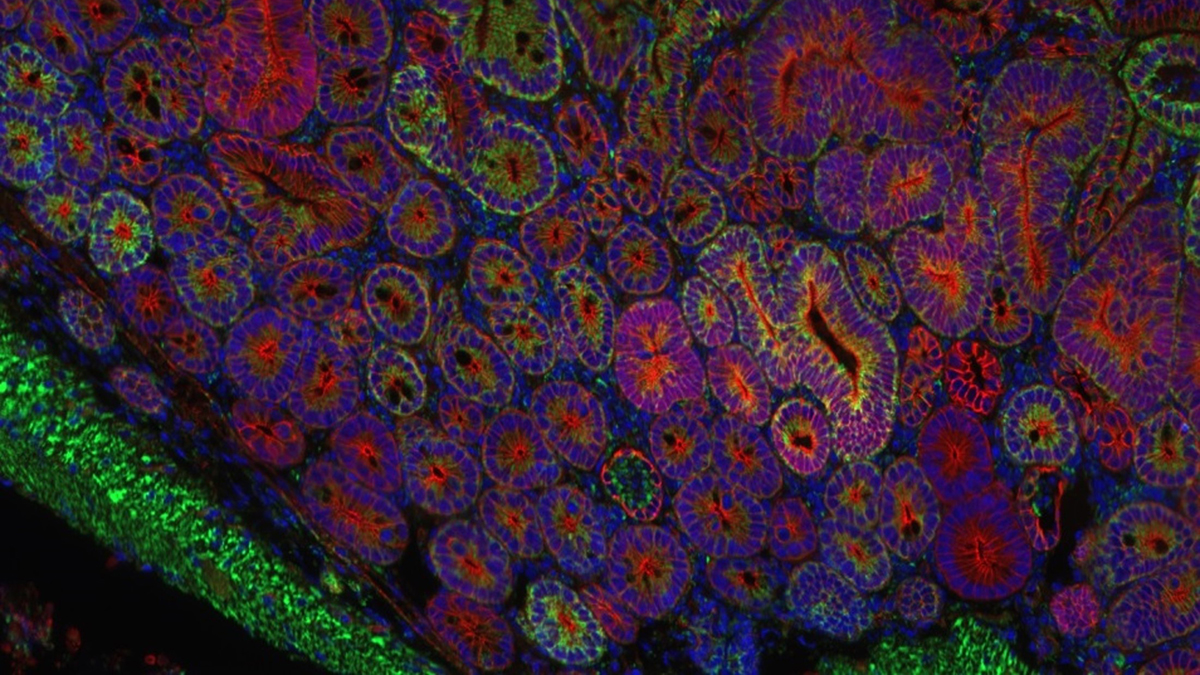
Using a novel mouse model combining mitochondrial DNA mutagenesis (polymerase gamma mutant) with loss of the tumour suppressor Apc, Greaves can visualise mitochondrial protein expression in early-stage colonic tumours, providing new opportunities to investigate the role of mtDNA mutations in cancer.
Mitochondrial DNA Mutations and Cancer
Mitochondria are involved in multiple activities within cells, including energy, biosynthesis, redox balance, and apoptosis. Furthermore, mitochondrial DNA (mtDNA) mutations are common in cancers, but how they affect tumor growth and the response to therapies is not well understood. A recent review, by Laura Greaves and colleagues, explored the prevalence and effects of mtDNA mutations in cancer, how they affect metabolic plasticity, and new experimental models and potential therapeutic opportunities. The study was published in Trends in Molecular Medicine.
The review emphasizes several key points. mtDNA mutations are common across human cancers. Mutation rates vary by tissue but range from 13% in glioblastoma multiforme to 63% in rectal adenocarcinomas. The effects of the mutations depend on the degree of heteroplasmy. Complex 1 is particularly affected, and there seem to be upper and lower limits to the levels of heteroplasmy that affect tumor progression. One common deletion (i.e., nucleotides 8470–13,447) that eliminates five tRNA genes and seven OXPHOS subunit genes is selected against during tumorogenesis. These findings suggest that the deletion is detrimental to cancer cell proliferation.
Recently, several exciting new mtDNA mutation experimental systems have been developed. For example, the transmitochondrial cytoplasmic hybrids involve the fusion of a mtDNA-depleted nuclear donor and an enucleated cell with mtDNA with specific mitochondrial genotypes. The mitochondrial genome can now be directly edited with DddA-derived cytosine base editors that enable precise C:G-to-T:A conversions within mtDNA. The PolgA mouse model allows mtDNA mutations to accumulate much faster than before. A point mutation reduces the effectiveness of proofreading by DNA polymerase gamma.
Yet, several significant challenges remain. It is difficult to interpret studies of mtDNA in tumors. Bulk homogenates contain the DNA of malignant cells, making it hard to know the exact amounts of DNAs in the mass. Even the hybrid models have limitations.
This comprehensive review provides an excellent summary of mitochondria and mtDNA in cancer. It summarizes the current understanding of these mutations in tumors and the opportunities and challenges of future research. Recognizing the effects of mtDNA mutations on mitochondrial metabolic plasticity and intercellular mitochondrial transfer may suggest new therapeutic approaches.
A Statement of Significance from Dr. Greaves
In this review, we bring together emerging evidence on how mitochondrial DNA mutations influence cancer metabolism, immune interactions and treatment response. We highlight that their consequences depend on the specific mutation, heteroplasmy level and cellular context, and explain how advances in mitochondrial genome editing now enable direct tests of causality. By connecting these experimental opportunities to therapeutic questions, we identify priorities for determining when mtDNA mutations create vulnerabilities that could inform more effective cancer treatments.
A Conversation with Dr. Greaves
MitoWorld: This is a terrific overview of mtDNA mutations and their involvement in cancer. Have you had any reaction from the research community as yet?
Dr. Greaves: It’s only recently been published, so it’s still early to gauge the response from the research community. It has already been cited, which is encouraging! I’m looking forward to seeing the conversations and research it helps to stimulate.
What I hope comes across is that we need to understand these mutations in context. Finding an mtDNA mutation in a tumour does not, by itself, tell us what it is doing. Its effects may depend on the particular mutation, its abundance and the biology of the tumour. The exciting thing is that we now have tools to investigate those questions experimentally, including whether the adaptations these mutations provoke could provide opportunities for treatment.
MitoWorld: Can you describe how your own research fits into the topics covered in this review?
Dr. Greaves: My research has grown out of an interest in how mtDNA mutations accumulate as we age and what they do to cells, particularly in the intestine. That led naturally to questions about cancer: how might these mutations affect tumour development, and could they influence how a tumour responds to treatment?
We are now investigating those questions using complementary approaches in colorectal, gastro-oesophageal and ovarian cancers. Working with our collaborators, we have introduced specific mtDNA mutations into organoids and human cancer cell lines, which we can compare with matched isogenic controls. That allows us to move from observing an association to testing whether a mutation actually causes a change in tumour behaviour.
We want to understand how these mutations affect growth, metastasis and interactions with surrounding cells, and whether the metabolic adaptations they produce create vulnerabilities we can target. Connecting that experimental work back to human tumours is central to what we are trying to achieve.
MitoWorld: Heteroplasmy is a significant challenge for studying the effects of mtDNA mutations and many other aspects of mitochondrial biology. The model systems seem to be a promising strategy to overcome this “threshold” challenge. Can you expand on those challenges and possibilities?
Dr. Greaves: The complication is that a cell contains many copies of mtDNA. Some can carry a mutation while others do not; that mixture is what we call heteroplasmy. The remaining normal copies can compensate, so a mutation may need to reach a substantial proportion before we detect a respiratory defect. There is no single threshold that applies to every mutation or cell type.
An average measurement across a tumour can also hide very different situations. It could reflect similar mutation levels in every cell, or a mixture of cells with very high and very low levels. Those patterns can change over time. Base editing and single-cell measurements give us ways to investigate that complexity directly.
For our models, the opportunity is to compare cells carrying the same mutation at different measured heteroplasmy levels and follow both the mutation and its functional effects. We cannot simply set any percentage we want and assume it will remain stable. These models allow us to study the threshold itself—and ask whether the threshold for altered growth or drug sensitivity is the same as the threshold for impaired respiration.
MitoWorld: The migration of mitochondria from one cell to another must be another challenge to the study of mtDNA mutations. Do you see any light at the end of the tunnel?
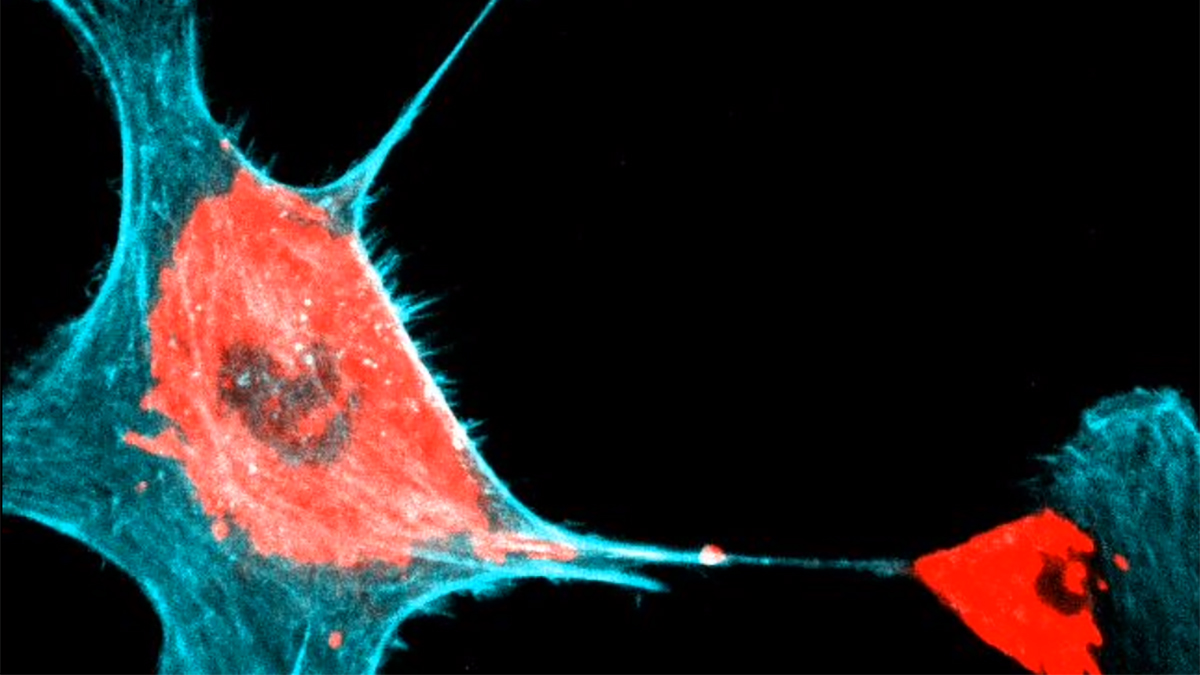
Dr. Greaves: Yes, although it certainly adds another layer of complexity! We have to consider the possibility that a cell’s mitochondrial population can be influenced by its neighbours. There is evidence in experimental cancer systems that the transfer of mitochondria carrying mtDNA mutations from cancer cells into T cells can impair their function. That makes transfer a potentially important part of tumour biology, as well as something we need to account for experimentally.
I think the way forward is to combine imaging with genetic tracking and functional measurements. We need to establish where the mitochondria came from, whether their DNA persists in the recipient cell and whether the transfer changes what that cell can do. Seeing mitochondrial material move is only part of the story.
The questions I would want to ask are how frequently this happens in tumours, under which conditions, and whether it helps cancer cells survive or changes the immune response. Answering those questions could reveal another way to interfere with the support that tumours receive from their surroundings.
MitoWorld: The shared governance of the cell between the nuclear genome and the much smaller mitochondrial genome is a fascinating topic. The mtDNA mutations present another aspect of that governance. Can you elaborate on how the study of these mutations might be window on the interactions of the two genomes?
Dr. Greaves: The two genomes have to work together for mitochondria to function. MtDNA encodes just 13 proteins, all involved in oxidative phosphorylation, while the nuclear genome supplies the vast majority of mitochondrial proteins. A change in either genome therefore has to be understood in the context of the other.
This is a central question in our research programme. If we introduce the same mtDNA mutation into cells with different cancer-driving nuclear mutations, do those cells respond in the same way? Can some compensate more effectively, and does that compensation create a particular drug sensitivity?
We can then test the explanation by manipulating candidate nuclear genes and asking whether that removes or restores the phenotype. That takes us beyond describing differences and towards identifying the mechanisms responsible. Ultimately, I want to know whether understanding both genomes together will help us predict tumour behaviour and treatment response more accurately.
MitoWorld: How did you come to be interested in mitochondria in the first place?
Dr. Greaves: It was quite an unexpected route. I studied pharmacology at Newcastle, and my undergraduate research project was the point at which I realised how much I enjoyed research. I liked being able to investigate a question where the answer was not already known.
I then started a PhD with Doug Turnbull and Tom Kirkwood, initially intending to study mtDNA mutations in neuronal stem cell ageing. When I arrived, though, the group had just received some colon tissue, and I was asked to look at mitochondrial function in the colonic epithelium before starting the planned project.
That ended up becoming my PhD and setting the direction of my research. I never got to the neurons! Instead, that initial work in the colon developed into a lasting interest in mtDNA mutations, ageing and, eventually, cancer. It is a good example of how an unexpected observation can shape an entire research career!
Reference
Shang E, Aftab O, Dayanamby A, Greaves LC (2026) Cancer mtDNA mutations: Metabolic plasticity and therapeutic promise? Trends in Molecular Medicine Cancer mtDNA mutations: metabolic plasticity and therapeutic promise?: Trends in Molecular Medicine