Mitochondrial Transfer and Lymph Node Metastasis
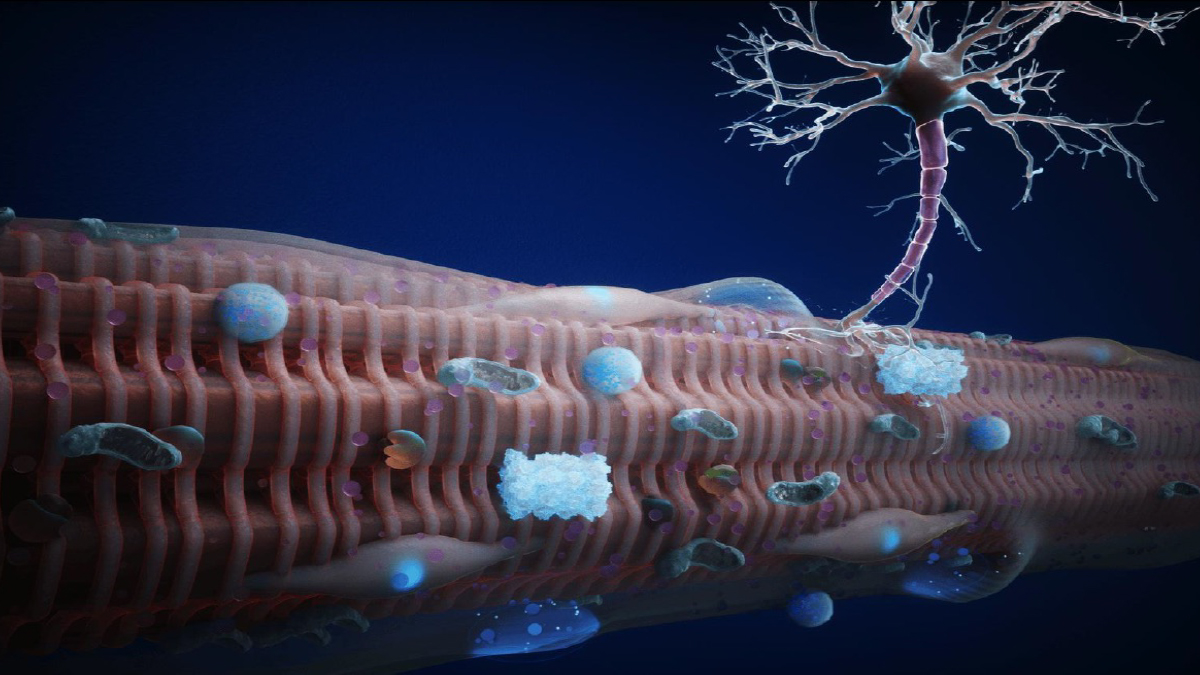
The immune system is our first line of defense against cancer. However, tumors have developed mechanisms to evade the immune system and even to invade tumor strongholds, such as lymph nodes. A multi-institute research team led by Azusa Terasaki and Derick Okwan-Duodu explored those mechanisms. They found that tumor cells kidnap mitochondria from immune cells and, in doing so, reduce the effectiveness of those cells. The work was published recently in a paper in Cell Metabolism.
The team was intrigued by the observation that tumor cells often metastasize to the lymph nodes, which are typically well stocked with immune cells. In their study, they first noticed that the immune cells lost mitochondria to the tumor cells.
They next determined what resulted from the loss of mitochondria by the immune cells. In fact, a lot happened, and it was not good for the immune cells. The ability of the immune cells to deal with perceived foreign cells, such as tumor cells, was significantly eroded. Reductions were observed in antigen-presentation, co-stimulatory machinery, and the activation and cytotoxicity of natural killer and CD8 T cells. When the transfer of mitochondria was blocked, the tumor cells could not metastasize to the lymph nodes.
The lymph nodes are common targets of metastases, which might seem counter-intuitive. However, Azusa et al. demonstrate how that happens. The findings of this study have clear clinical implications.
A conversation with Drs. Azusa Terasaki and Derick Okwan-Duodu:
MitoWorld: Can you give us an idea of the research you plan to do to follow up on this study?
We are interested in understanding the fate of the mitochondria once they are acquired by cancer cells. The assumption is that cancer cells will integrate the new biomaterial and use it up. But, can they do something else with it?
MitoWorld: What do you think makes the mitochondria of immune cells vulnerable to kidnapping by the tumor cells in a way that the stromal cells are not?
Answer: We are unsure about this. Please note that many other cell types also transfer mitochondria to cancer. Therefore, the question may not be “why are immune cells vulnerable to mitochondria kidnapping (I love the word choice).” I think it should be, why do cells give mitochondria to cancer anyway? We think cancer, the wound that does not heal, “pretends” to be struggling to elicit mitochondria transfer from other cells as part of normal cooperative biology. Remember, the key theme that is emerging from mitochondria transfer is that is a metabolic rescue program.
MitoWorld: Do you have any thoughts on how the loss of mitochondria impairs the functioning of the immune cells? Is it simply a loss of energy or might it be something else?
Answer: I think it may play a key role. Either the loss of energy, or the disruption from losing mitochondria. Inevitably, the mitochondria has to be disrupted one way or another before they are transferred, and I don’t think immune cells would like that.
MitoWorld: How do the tumor cells attract the immune cell mitochondria, and what mechanism might be used in that transfer?
Answer: No idea. All that is currently known is tunneling nanotubes (predominantly). But it is unclear why cancer cell attracts more mitochondria from cell type A compared to cell type B.
MitoWorld: Other recent papers have described how the transfer of mitochondria to tumor cells fortifies the tumor cells, particularly enhancing their energy levels. You mention several effects on the tumor cells. Can you speculate on how those happen?
Answer: A huge one is indeed metabolic. A highly proliferative cell will use new raw material for whatever their bioenergetic or biosynthetic needs may demand. Nonetheless, mitochondria are also signaling units, and so incoming mitochondria could provide a means of cellular communication beyond metabolism From an espionage perspective, think of a cancer cell now having access to information of the host that is coded in the mitochondria it hijacks. The implications are endless.
MitoWorld: This work would seem to suggest possible clinical applications. Do you have plans to pursue any of them?
Answer: Blocking mitochondria transfer should improve cancer therapies because, at the minimum, you may be shutting off metabolic pipeline to cancer cells while leaving immune cells with a full complement of their metabolic resources, which gives them a better chance to mount effective anti-cancer immunity.
Reference
Terasaki A, Bhatnagar K, Weiner AT, Tan Y, Szeifert V, Huang HL, Wiggers L, Rodrigues V, Rada CC, Shankar V, Saito S, Ankomah PO, Roth T, Chiu B, West R, Li L, Reticker-Flynn N, Axelrod JD, Brestoff JR, Li B, Engleman E, Okwan-Duodu D (2026) Mitochondrial transfer from immune to tumor cells enables lymph node metastasis. Cell Metabolism
https://www.cell.com/cell-metabolism/abstract/S1550-4131(25)00545-5