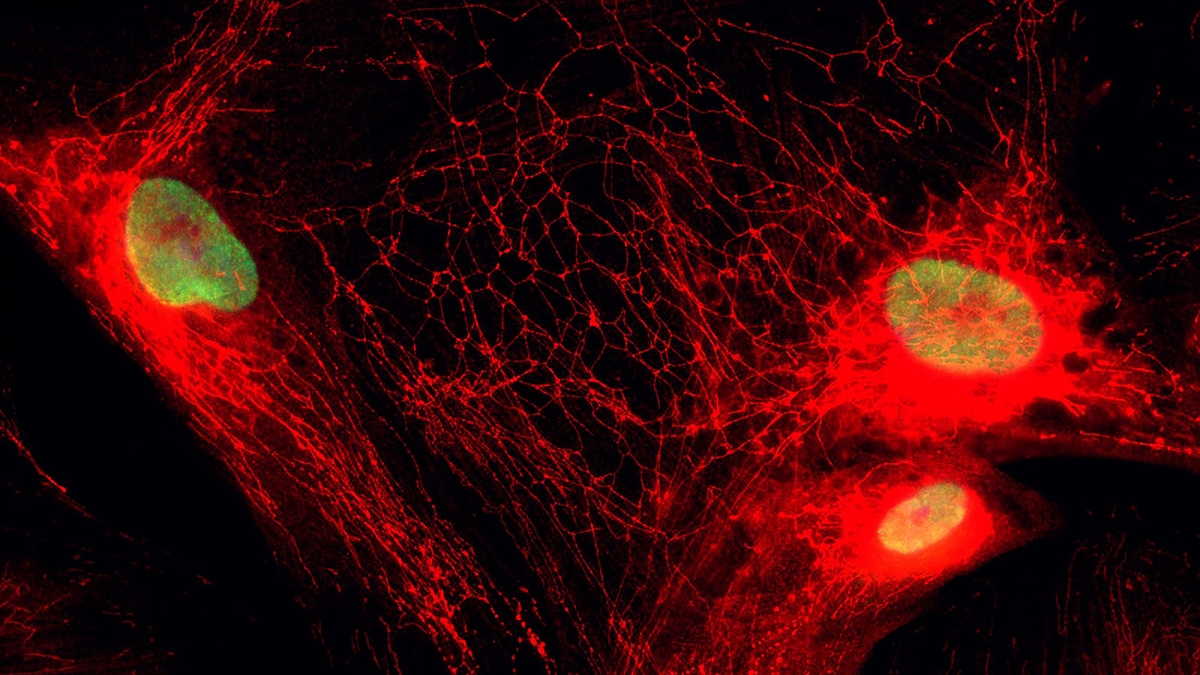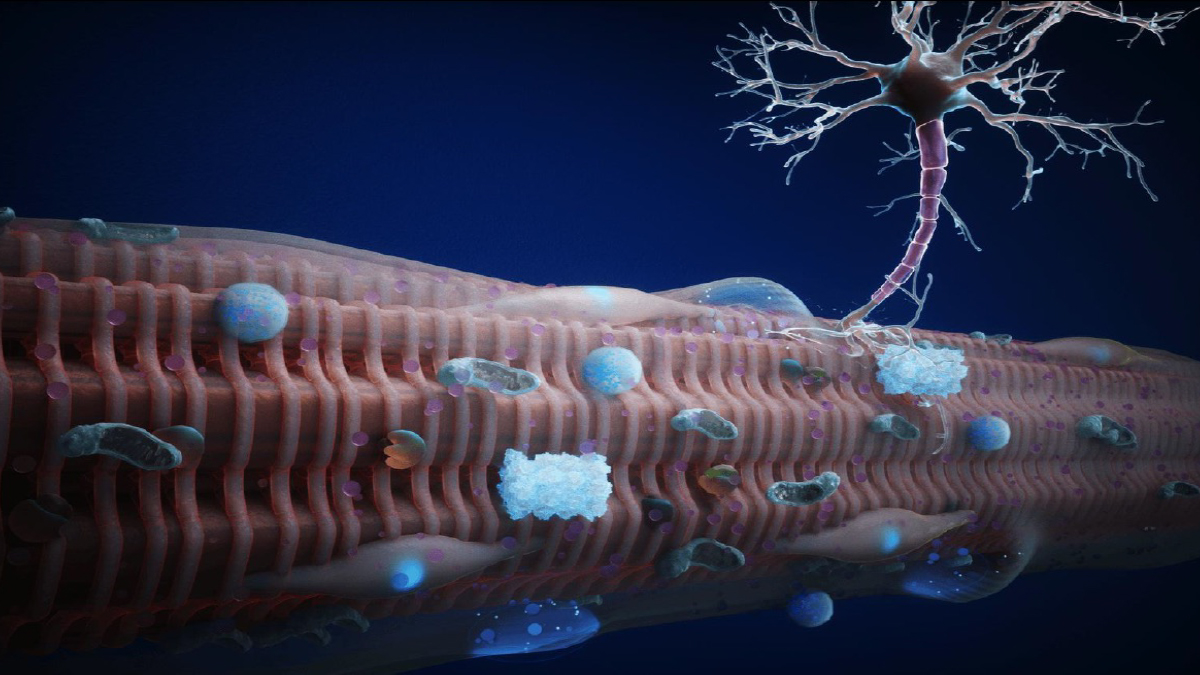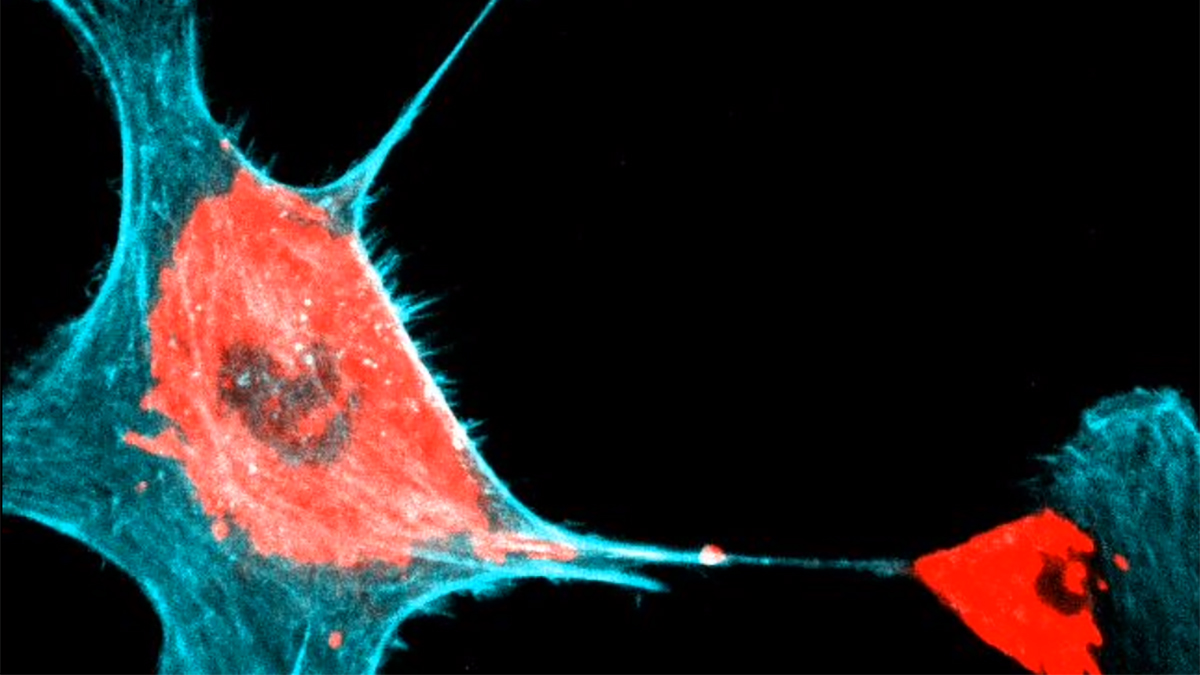
Mitochondrial transfer between tumor cells.
Tunneling Nanotubes, Mitochondria and Cancer
Mitochondria can be exchanged between cancer cells and cells of the tumor microenvironment, but the mechanisms and functional consequences of this exchange remain incompletely understood. Recently, Ines Saenz-de-Santa-Maria, a postdoctoral researcher in Chiara Zurzolo’s laboratory at the Institut Pasteur, and Zurzolo led a study investigating how tunneling nanotubes (TNTs) mediate mitochondrial exchange between glioblastoma cells and non-tumoral astrocytes.
The study reveals a potential mechanism by which intercellular mitochondrial exchange may contribute to tumor adaptation and highlights TNT-mediated communication as a potential therapeutic target. The results were published in Nature Communications.
Mitochondrial transfer between tumor cells and between tumor and non-tumor cells has been implicated in tumor progression, metabolic adaptation and resistance to therapy. One important route for this transfer is through TNTs, thin membranous connections that establish direct communication between cells. TNTs are heterogeneous in their cytoskeletal composition: some contain predominantly actin, whereas others contain both actin and microtubules and tend to be thicker and more stable. In glioblastoma, TNTs coexist with another type of intercellular connection known as tumor microtubes, creating complex networks of communication within the tumor and its microenvironment.
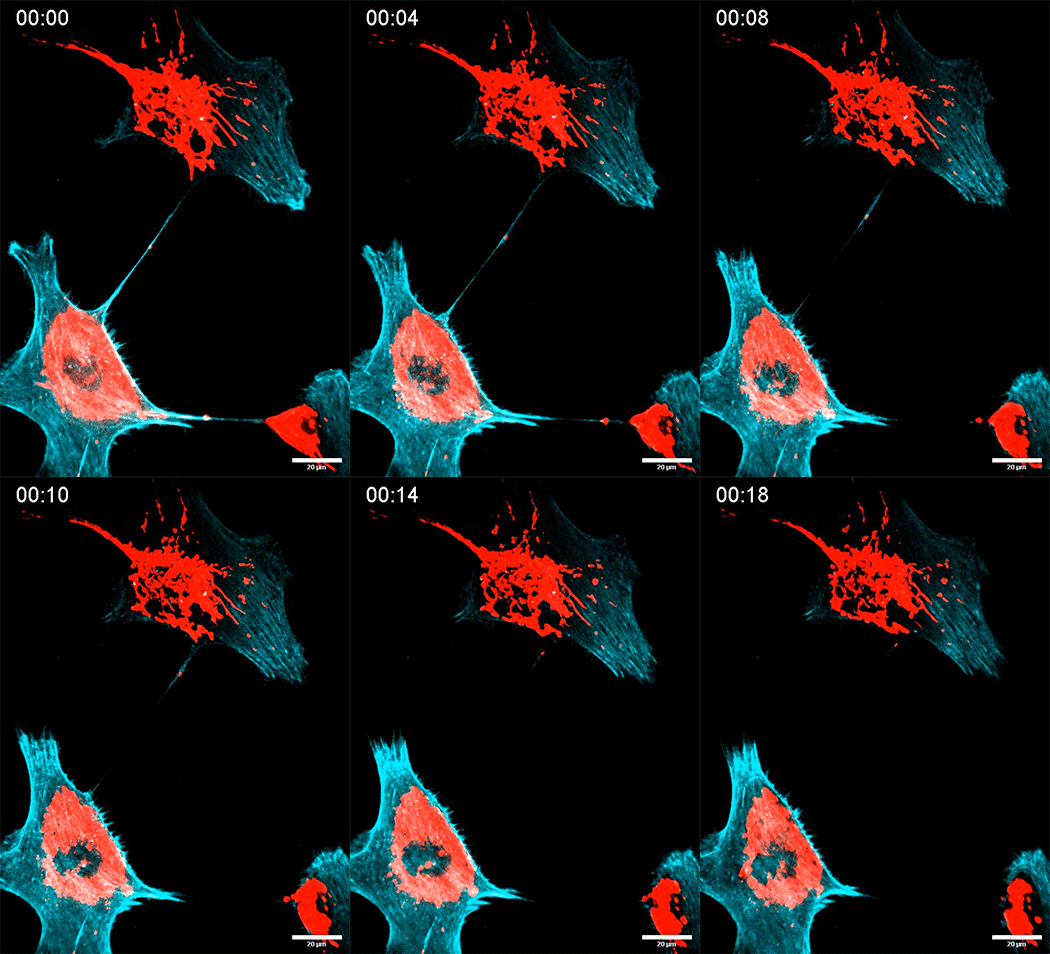
Mitochondrial transfer between tumor cells.
Saenz-de-Santa-Maria and colleagues investigated mitochondrial transfer between glioblastoma/glioblastoma stem cells and non-tumoral astrocytes. They found that mitochondrial exchange is bidirectional but asymmetric, with astrocytes transferring mitochondria to tumor cells considerably more efficiently than tumor cells transfer mitochondria to astrocytes. Importantly, the consequences of transfer depended on its direction. Astrocyte-derived mitochondria integrated into the mitochondrial network of recipient tumor cells, and their acquisition was associated with changes in mitochondrial activity and increased expression of genes involved in mitochondrial metabolism. Conversely, damaged mitochondria transferred from glioblastoma cells to astrocytes were targeted to the lysosomal compartment and underwent mitophagy, suggesting that astrocytes may contribute to the disposal of dysfunctional tumor-cell mitochondria.
The researchers also asked whether TNT-mediated mitochondrial communication occurs in tumors in vivo. Using intravital subcellular microscopy in living mice, they visualized TNT-like connections between tumor cells with characteristics similar to those observed in vitro, including mitochondria within these structures. They also detected transferred mitochondria in recipient cells. These observations support the existence of TNT-mediated mitochondrial transfer in living tumors, although the complexity of the tumor environment makes it difficult to completely distinguish TNTs from other intercellular structures such as tumor microtubes.
The findings reveal a bidirectional mitochondrial exchange between tumor cells and their microenvironment that contributes to mitochondrial homeostasis. Astrocytes can provide tumor cells with healthy mitochondria associated with metabolic changes, while at the same time accepting damaged tumor-cell mitochondria that can subsequently undergo mitophagy. The results, therefore, suggest that intercellular mitochondrial exchange may constitute a previously underappreciated mechanism of tumor adaptation and resilience and raise the possibility that disrupting TNT-mediated communication could provide a new therapeutic strategy.
A Statement of Significance by Chiara Zurzolo and Ines Saenz-de-Santa-Maria
Our study reveals that mitochondrial exchange between glioblastoma cells and non-tumoral astrocytes is not simply a passive transfer of organelles but may represent a mechanism through which tumor cells maintain mitochondrial homeostasis and adapt to their environment. We found a striking bidirectional exchange: astrocytes predominantly provide tumor cells with healthy mitochondria, which integrate into their mitochondrial network and are associated with increased mitochondrial activity and expression of genes involved in mitochondrial metabolism. Conversely, damaged mitochondria transferred from tumor cells to astrocytes are targeted to the lysosomal compartment and undergo mitophagy. Thus, surrounding cells may both provide functional mitochondria to tumor cells and help eliminate their damaged ones.
Importantly, using intravital subcellular microscopy, we also obtained evidence supporting TNT-mediated mitochondrial transfer in tumors in living animals. Together, our findings suggest that mitochondrial quality control may extend beyond the boundaries of an individual cell and highlight TNT-mediated intercellular communication as a potential therapeutic vulnerability in cancer.
A Conversation with Chiara Zurzolo and Ines Saenz-de-Santa-Maria
MitoWorld: Can you give us an idea of how your future research might build on the findings of this paper?
Chiara Zurzolo: One of the most interesting questions raised by our work is whether mitochondrial transfer is a regulated process. Our results suggest that cells do not simply exchange mitochondria indiscriminately: healthy mitochondria transferred from astrocytes can integrate into the mitochondrial network of tumor cells, whereas dysfunctional mitochondria transferred in the opposite direction are targeted for degradation in astrocytes.
In my laboratory at the Institut Pasteur, we now want to understand how cells recognize which mitochondria should be retained, degraded or transferred, and what determines the direction of this exchange. Another important question concerns the TNT itself: how these connections form between particular cells, how mitochondria are selected and transported through them, and how TNT-mediated exchange interacts with other communication networks in the tumor microenvironment. Ultimately, it will be important to determine whether this mitochondrial exchange contributes directly to tumor growth, adaptation to stress and resistance to therapy.
Ines Saenz-de-Santa-Maria: Since completing this work at the Institut Pasteur, I have moved to a new laboratory, where I am pursuing a complementary direction arising from this study. In particular,I am interested in whether mitochondria-targeting approaches can be used to interfere selectively with mitochondrial transfer or with its consequences in recipient tumor cells. This builds on one of the important questions raised by our work: whether the mitochondrial support that tumor cells receive from their microenvironment can eventually be therapeutically targeted.
MitoWorld: You note that your findings implicate TNTs as possible therapeutic targets. Can you elaborate on that, and do you have any plans to pursue that direction?
Chiara Zurzolo: TNTs are attractive potential targets because they provide tumor cells with a form of direct cell-to-cell communication that may help them adapt to stress. In our study, glioblastoma cells could acquire healthy mitochondria from surrounding astrocytes, while damaged tumor-cell mitochondria could be transferred in the opposite direction and cleared by the astrocytes. Interfering with this communication could therefore potentially reduce the capacity of tumor cells to maintain mitochondrial fitness.
However, we need to be cautious. TNTs are also used by normal cells and can participate in protective responses, so simply blocking all TNT formation would probably not be an ideal therapeutic strategy. A major goal is therefore to identify the molecular mechanisms controlling TNT formation, cargo selection and transfer in tumor cells. This may eventually allow us to interfere selectively with pathological TNT-mediated communication rather than with intercellular communication more generally.
Ines Saenz-de-Santa-Maria: An important next step will be to determine experimentally whether interfering with mitochondrial exchange actually reduces the advantages that tumor cells gain from their microenvironment. Our study identifies several points at which this process might potentially be targeted—from TNT formation and mitochondrial selection and transport to the fate of transferred mitochondria in recipient cells. At the same time, TNTs could potentially be exploited rather than blocked, for example as routes for the intercellular delivery of therapeutic nanoparticles (Sierri*, Saenz-de-Santa-Maria* et al., Nanoscale, 2025), opening new possibilities for more targeted therapies. Understanding which of these steps is specific to tumor-associated communication will be important for developing selective approaches.
MitoWorld: The exchange of mitochondria between cells was controversial just a few years ago. Are you surprised at how quickly it has been accepted?
Chiara Zurzolo: Perhaps not surprised, but it has been remarkable to see how rapidly the field has developed. For many years, mitochondria were viewed primarily as organelles whose lifecycle was confined within an individual cell. We now know that intact mitochondria can move between cells in many physiological and pathological contexts.
Part of this change has been driven by improvements in live-cell imaging, genetic labeling and intravital microscopy, which allow us to visualize these events much more convincingly. One of the reasons we wanted to perform the in vivo experiments in this study was precisely to move beyond observations made exclusively in cultured cells. We were able to visualize TNT-like connections containing mitochondria in living tumors and to detect transferred mitochondria in recipient cells. There are still important mechanistic questions to resolve, but intercellular mitochondrial transfer is becoming increasingly difficult to regard as an experimental curiosity.
MitoWorld: Bacteria are well known to communicate critical information by quorum sensing. Might mitochondria retain something like that signaling mechanism to direct their movements between cells?
Chiara Zurzolo: It is an intriguing analogy, although at present there is no evidence that mitochondria use a quorum-sensing mechanism to direct their intercellular movement. What we do think is very interesting is the possibility that the metabolic or stress state of a cell—and perhaps of individual mitochondria—influences whether mitochondria are retained, degraded or transferred to another cell.
Our findings raise this question because the fate of transferred mitochondria appears to depend strongly on their condition and on the recipient cell. Healthy astrocytic mitochondria can integrate into the tumor-cell mitochondrial network, whereas dysfunctional mitochondria transferred from tumor cells to astrocytes are instead directed toward degradation. Understanding the signals that distinguish these different mitochondrial fates is an important challenge for the field.
Ines Saenz-de-Santa-Maria: We also wonder if signals from the surrounding microenvironment could act as external cues triggering or directing mitochondrial transfer between cells. Conditions, such as hypoxia, metabolic stress or changes in extracellular matrix stiffness, could potentially influence when and where this exchange occurs. It would be particularly interesting to explore whether such signals promote mitochondrial transfer at very early stages of tumor development, perhaps even during the establishment of a pre-tumoral niche.
MitoWorld: You examined two types of brain cells. Do you think your findings could be applicable to other tissue types?
Chiara Zurzolo: Very likely, although the biological consequences will depend on the particular cells and tissue. Intercellular mitochondrial transfer has now been reported in many different cellular contexts, including several cancers, and TNTs have been observed in numerous cell types.
Interestingly, we observed a related phenomenon in a completely different pathological context. In another work from my laboratory led by Ranabir Chakraborty using models of Parkinson’s disease, we found bidirectional communication between neurons and microglia through TNTs (Chakraborty, Palese et al., Nature Communications, 2026; Chakraborty, Maya et al., Nature Communications, 2026). Under α-synuclein-induced stress, neurons can transfer damaged mitochondria to microglia, where they are targeted for lysosomal degradation. This suggests that the principle we observe here may extend well beyond cancer: cells with different capacities can cooperate to maintain mitochondrial and cellular homeostasis.
What may therefore be more general than the glioblastoma-astrocyte interaction is the idea that mitochondrial quality control can operate at the level of a cellular community rather than being restricted to an individual cell. A stressed cell may transfer damaged organelles to a cell with greater degradative capacity, while in other situations functional mitochondria can be transferred to cells in need. Whether this represents a broadly used mechanism of tissue homeostasis—and how tumors or diseased tissues exploit or modify it—is something we are very interested in understanding.
MitoWorld: How did you become interested in mitochondria in the first place?
Ines Saenz-de-Santa-Maria: My interest in mitochondrial transfer started during my PhD, when I first observed mitochondria moving between cancer cells through TNTs (Saenz-de-Santa-Maria et al., Oncotarget, 2017). Given the central role of mitochondria in cancer cell metabolism, survival and adaptation to stress, I wondered why cells exchange mitochondria and what happens to them once they reach the recipient cell.
I continued exploring these questions as a postdoctoral researcher in Chiara Zurzolo’s laboratory at the Institut Pasteur. There, I worked with a PhD student to investigate mitochondrial transfer in patient-derived glioblastoma cells and 3D tumor organoids, including how this process is affected by irradiation (Pinto*, Saenz-de-Santa-Maria* et al., Biochemical Journal, 2021). This work ultimately led us to ask a broader question: how are mitochondria exchanged between tumor cells and the non-tumoral cells of their microenvironment, and what are the functional consequences of this exchange?
What I find particularly interesting is how context-dependent this process is. Mitochondrial transfer can rescue stressed cells, but in cancer it can also support tumor metabolism and survival, contribute to therapy resistance, and potentially influence interactions with the immune system. Our recent work adds another layer, showing that transferred mitochondria can have very different fates and functional consequences depending on the donor and recipient cells.
Reference
Saenz-de-Santa-Maria, I., Pepe, A., Tinevez, JY. et al. (2026) Tunneling nanotubes regulate mitochondrial homeostasis between glioblastoma and astrocytes, and between tumor cells in vivo. Nat Commun 17: 9788. https://doi.org/10.1038/s41467-026-76619-9