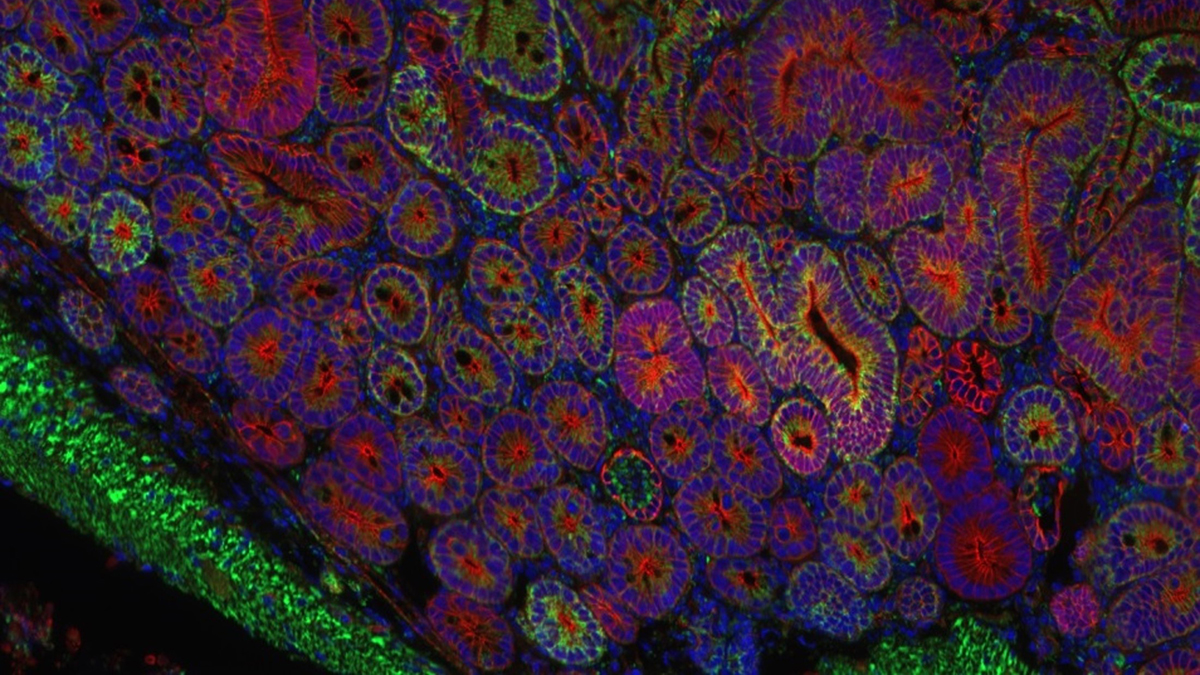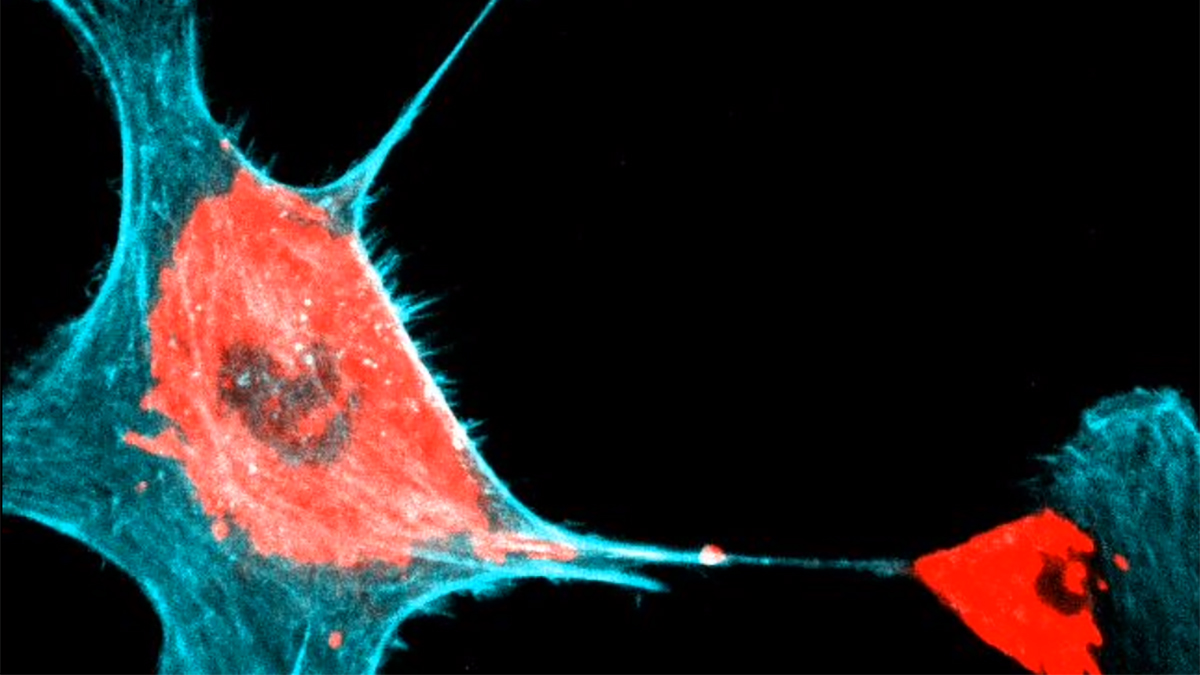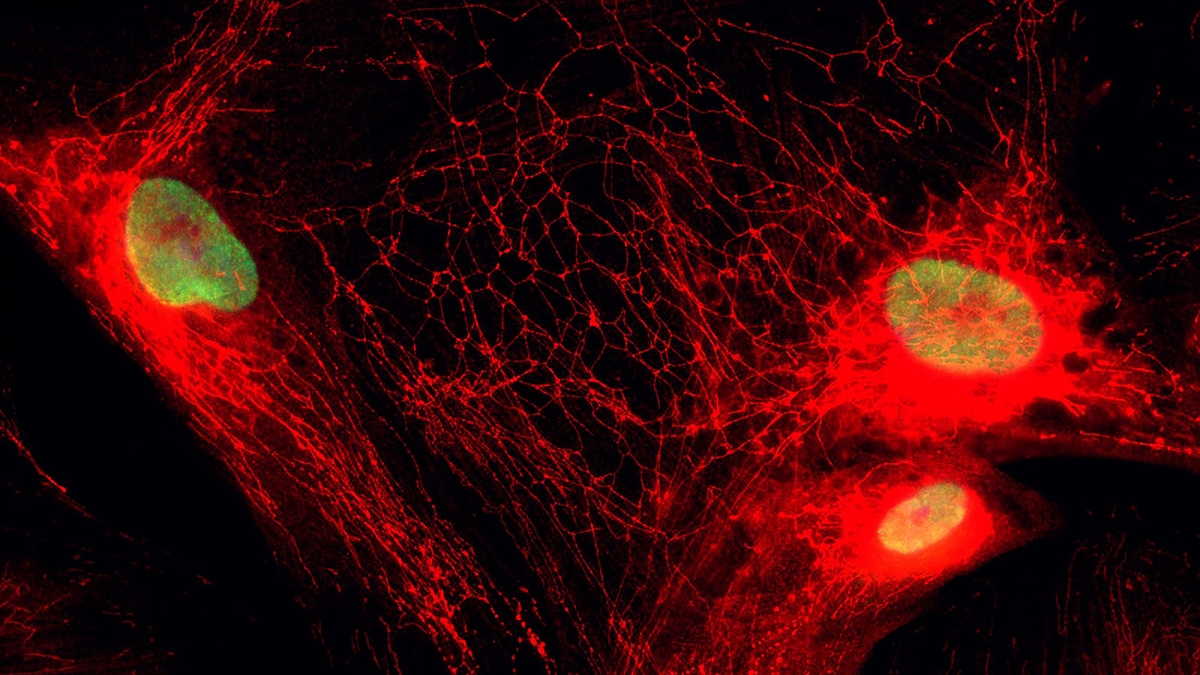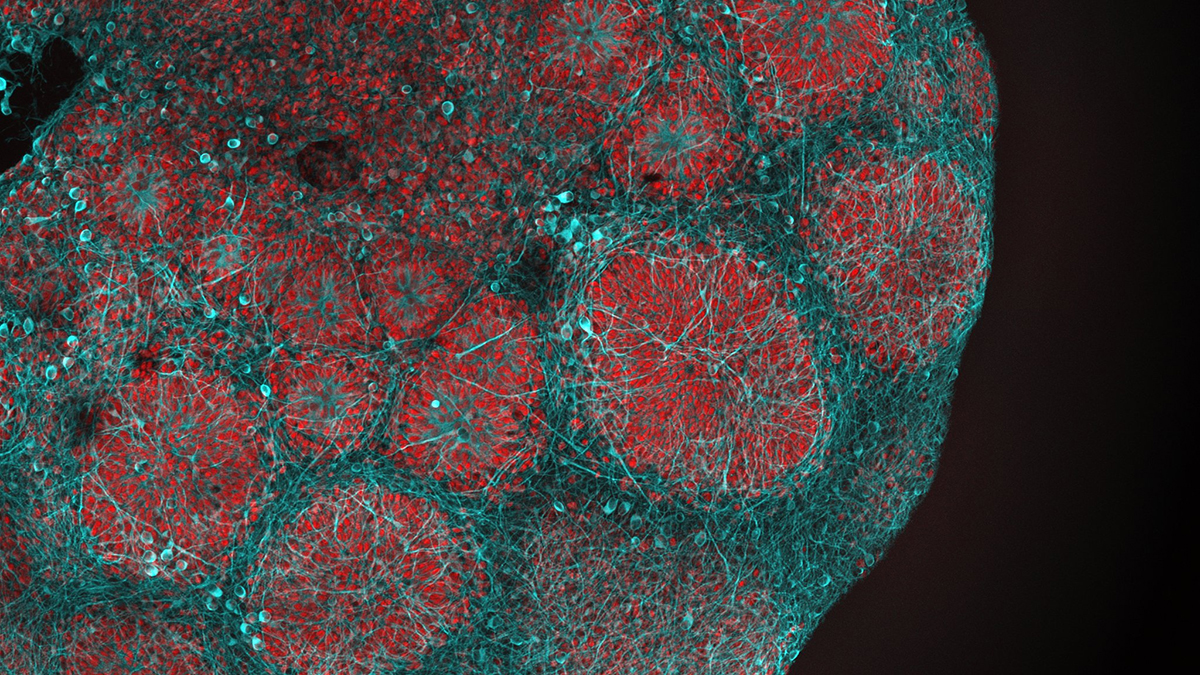
“In brain organoid models of Leigh syndrome, the ratio between progenitor cells (red) and neurons (cyan) is reduced. Sildenafil was found to partially correct this defect leading to improved organoid growth”.
Using iPS Cells to Find Therapies for Mitochondrial Diseases
A screen of iPS cells recently identified sildenafil as a potential treatment for Leigh syndrome (LS). Moreover, further testing of the drug showed marked improvement in animal models and human patients. The results of the study, led by Alessandro Prigione, were published in Cell.
LS is a severe mitochondrial disease that affects neurological development and muscles and results in death. It is caused by mutations in over 100 genes in either the nuclear or mitochondrial genomes. There are no treatments. Moreover, the lack of model systems has been a major obstacle to understanding LS.
The Prigione research team set out to change this. They used iPS cells from LS patients to generate neural precursor cells (NPCs). Those cells have an MT-ATP6 variant with abnormal mitochondrial membrane potential that can be exploited in screens. They screened 5,632 approved compounds and identified sildenafil as a possible candidate.
Sildenafil has been implicated in the treatment of multiple disorders. It is widely studied and beneficial in a wide range of conditions, including pulmonary arterial hypertension in children. In this study, it relieved disease symptoms, promoted neuronal outgrowth, normalized calcium homeostasis in human and animal models of LS and in six patients treated on individual basis.
The findings in this study demonstrated the value of screenings in iPS cell models and also identified sildenafil as a potential therapy for mitochondrial diseases. Dr. Prigione recently published a separate study that complements this one. That study in Nature Communications is the subject of a separate blog.
A Statement of Significance from Dr. Prigione:
LS is currently untreatable. The most frequent causes are variants in the mitochondrial gene MT-ATP6. Since it is difficult to engineer mitochondrial DNA (the famous genetic scissor CRISPR does not work for the mitochondrial DNA), it has been difficult to study this disease. Using patient-derived neural cells, we could screen drugs directly in the cell type affected by the disease. We identified sildenafil as a promising drug. We performed several validations using 3D organoid models and also animal models of LS due to nuclear genetic variants. Since sildenafil can be safely used in children with pulmonary arterial hypertension, we could treat children with LS on off-label individual basis. Sildenafil improved motor and developmental function and lowered the risk of metabolic crises, which can be detrimental in affected individuals. A double-blind placebo-controlled trial is now being set up to start in October 2026.
A Conversation with Dr. Prigione and Dr. Annika Zink, first author of the study in Cell
MitoWorld: You have developed a new method for repurposing existing drugs. Do you have plans for continuing this line of research?
Dr. Zink: Definitely. We are currently using iPS models in 2D and 3D to study additional treatments for LS and other rare disorders. The bottleneck is finding a reliable disease phenotype in these models. Once this is identified, we can use the models as drug discovery platform. In fact, in an AFM-funded project, we are employing our iPS platform not only for repurposable drugs but also to assess complementary strategies based on gene therapy.
Dr. Prigione: We have a new consortium called SynLeigh that starts in June 2026 and is funded by the European rare disease program ERDERA. In this project, we are looking at potential synergy of sildenafil with other repurposable drugs to find improved therapeutic options. We are also investigating the impact of sildenafil on different variants causing LS and in the context of other mitochondrial disorders.
MitoWorld: Do you think the iPS cells could be used in other tissues and diseases?
Dr. Zink: Yes. This is the strength of this model. iPS cells can be easily differentiated into different cell types and tissues in both 2D and 3D. Patient-specific iPS models make it possible to study tissue-specific disease mechanisms and also provide a powerful platform for disease modeling and drug discovery. In fact, in our study in Cell, we used cardiac cells generated from LS patient iPS cells to exclude potential cardiotoxicity of sildenafil.
Dr. Prigione: In our laboratory, we are using iPS cells to generate different types of brain organoids (e.g., cortex, cerebellum, midbrain). These studies may help us to understand which areas of the brain can be more strongly impacted by disease features. In this way, we may discover underlying mechanisms that could be targeted for therapies.
MitoWorld: Sildenafil has shown promise in a surprising number of different disorders. Can you speculate on why that is so? Is it due to its connection to calcium and mitochondria or simply vasodilation?
Dr. Prigione: This is exciting. Previous works suggested that sildenafil may be beneficial also in Alzheimer’s disease or Huntington’s disease. We like to think that it has to do with the central role of mitochondria in several disease processes. If sildenafil can improve mitochondrial calcium and increases the delivery of oxygen to tissues, it may provide support in those conditions that could benefit from additional energy. Surprisingly, lower oxygen has also been found beneficial in LS. Perhaps then the modulation of oxygen is really crucial, and additional work should focus on understanding this aspect.
MitoWorld: Are you interested in taking sildenafil into clinical trials for the mitochondrial diseases?
Dr. Prigione: Yes, we are currently setting up a randomized double-blind placebo-controlled trial with sildenafil in individuals with LS carrying MT-ATP6 variants. We should start recruiting patients in October 2026. We designed the trial in concert with the European Medicines Agency (EMA). To achieve a sufficient patient number, the trial will be conducted in Germany, The Netherlands, France, Italy, and Spain. We welcome patients coming from additional countries if their conditions allow them to travel to one of the trial sites.
Unfortunately, no pharma showed any interest in financial supporting this. The trial is entirely supported by third-party funding, primarily through the Horizon consortium SIMPATHIC (www.simpathic.eu). In fact, we are searching for additional funds to cover greater expenses due to the larger number of patients requested by EMA. We would be grateful if anyone would like to reach out for suggestions on how to raise additional funds. For patient families interested in the trial, please write to this email address: Simpathic.aig@radboudumc.nl
MitoWorld: We asked you about your interest in mitochondria in another blog. Interest has grown in mitochondria in various diseases. What is your sense of where all this research is going?
Dr. Prigione: Mitochondria are increasingly recognized in aging and several disease processes and also as treatment targets. Improving mitochondrial function may be seen in the future as a central goal for several therapeutics and as a general strategy to maintain health and prevent deterioration. Transplantation of mitochondria may also represent an innovative approach beyond compounds and gene therapy applications. As rare disease researchers, we hope that this renewed interest in mitochondria in more common conditions would lead to increased treatment options for children affected by primary mitochondrial diseases.
References
Zink A, Dai DF, Wittich A, Henke MT, Pedrotti G, Heiduschka S, Santamaria G, Pentimalli TM, Brueser C, Notopoulou S, Umar AR, … Prigioni A (2026) Pluripotent stem-cell-based screening uncovers sildenafil as a mitochondrial disease therapy. Cell 189: 1656–1679.
https://www.cell.com/cell/fulltext/S0092-8674(26)00173-X
Menacho C, Okawa S, Álvarez-Merz I, Wittich A, Muñoz-Oreja M, Lisowski P, Martín ML, Pentimalli TM, Zakin S, Thevandavakkam M, Jerred C, … Del Sol A, Prigione A (2026) Accelerating Leigh syndrome drug discovery through deep learning screening in brain organoids. Nature Communications 17(1): 3570.