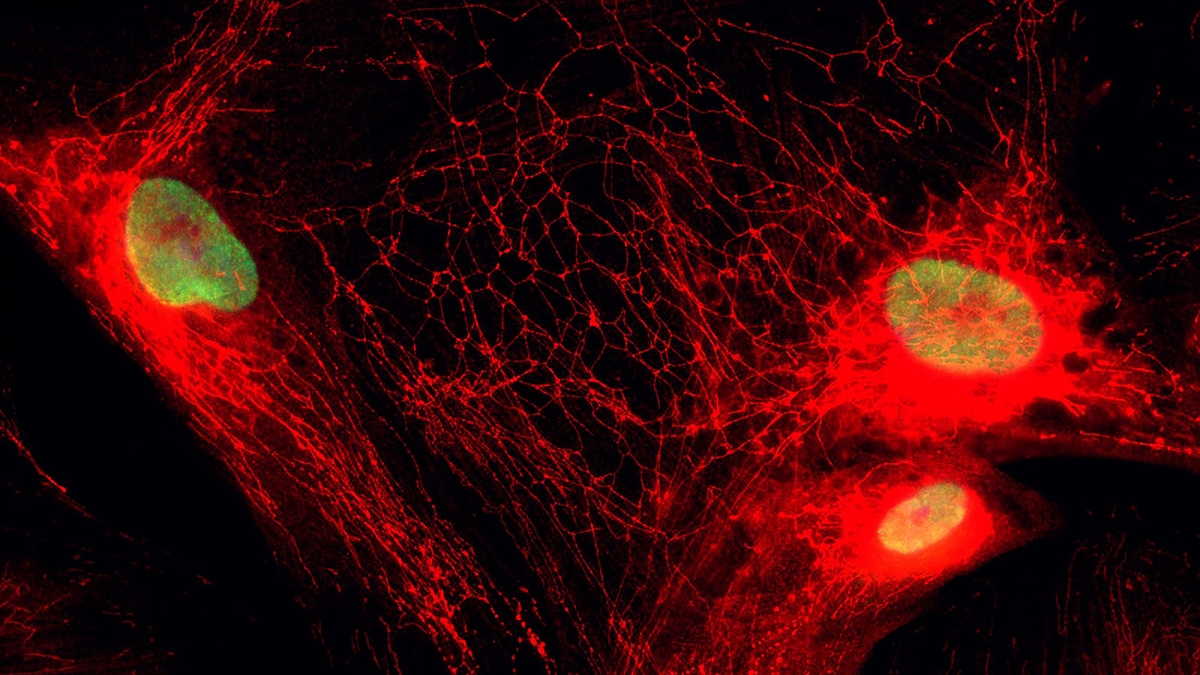
Gravity and other forces are all around us, but do they affect gene expression? A multi-institute research team, led by Shintaro Iwasaki of RIKEN/the University of Tokyo, explored how mitochondrial translation is influenced by gravitational and mechanical forces. The study was recently published in Nature Communications.
Gravity Influences Mitochondrial Translation
All living organisms live in an environment shaped by gravity and other forces, but how do these forces affect gene expression? A multi-institute research team, led by Shintaro Iwasaki of RIKEN/the University of Tokyo, explored how mitochondrial translation is influenced by gravitational and mechanical forces. The study was published in Nature Communications.
After space flights, astronauts return to Earth with weak muscles. The mechanical stresses of gravity on Earth stimulate mitochondrial function, but without gravity, muscles atrophy from disuse. Previous research had documented damage to mitochondria during spaceflight. Multiple experiments on many space flights have shown various kinds of damage to cells and tissues. However, our understanding of those challenges is limited.
The Iwasaki research team sought to leverage and expand our knowledge of the effects of spaceflight on living organisms. They obtained samples that had flown in space. Frozen mammalian cells were flown to the International Space Station. In space, the samples were thawed, subjected to various treatments, and refrozen to return to Earth. Back on Earth, the researchers then used genome-wide ribosome profiling to compare mitochondrial translation in the spaceflight samples under microgravity and 1 G in the International Space Station. Caenorhabditis elegans samples were obtained from previous space flights.
They found that the samples had lower metabolic activity than Earth-bound samples. More specifically, mitochondrial translation was disrupted. Other cellular functions were affected, including loss of cell adhesion and radiation damage to the ECM. They looked at a poorly understood cell signaling pathway that connects cell adhesion sensing, mitochondrial malonyl-CoA balance, and translation. ATP production might still be found in the human cells, but mitochondrial translation was clearly affected in C. elegans. Other affected cell components included intermediate filaments and the apoptotic cascade.
While the connection between spaceflight and muscles atrophy was well-known, this study advances our understanding of how cells use gravity and other mechanical forces to regulate mitochondrial translation. It also provides valuable information that will help future astronauts to preserve muscle strength during extended space flights.
Statement of Significance by Dr. Iwasaki:
Gravity is a constant part of life on Earth, but we still know surprisingly little about how cells sense it. Our study shows that microgravity reduces mitochondrial translation. We also identified a pathway linking mechanical forces outside the cell to protein synthesis inside mitochondria. This may help us understand not only the effects of spaceflight, but also muscle disuse, aging, and mitochondrial disease.
A Conversation with Dr. Iwasaki:
MitoWorld: Can you give us an idea of how you might be thinking to extend the findings of this study?
Dr. Iwasaki: We would first like to identify the exact molecular mechanisms that could be affected by malonylation and control mitochondrial translation in response to mechanical forces. We are also interested in whether the same mechanism works in other tissues, such as the heart, bone, and blood vessels. Another important question is whether exercise, mechanical stimulation, or drugs could help maintain mitochondrial function during long-term spaceflight or physical inactivity.
MitoWorld: You mention in your Limitations to the Study section that you cannot eliminate other possible mechanisms that might affect mitochondrial translation. Can you speculate on what those might be?
Dr. Iwasaki: Malonylation is probably only one part of the story. Microgravity can also affect ATP/GTP energy balance, membrane potential, calcium signaling, redox balance, and many other metabolites. Changes in mitochondrial shape, protein import, RNA processing, or ribosome assembly could contribute as well. These are still open questions, and we will need more detailed biochemical and genetic studies to test them.
MitoWorld: How were you able to arrange to be a part of the experiments on the International Space Station?
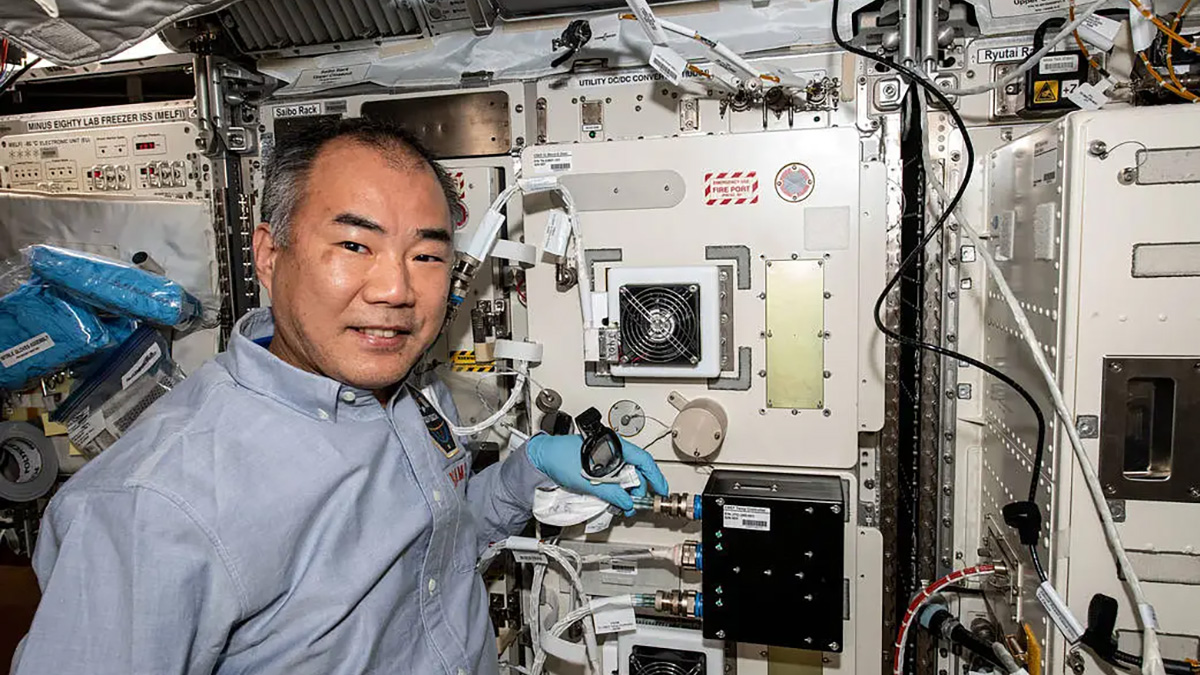
Dr. Iwasaki: We applied to an open call from JAXA with a proposal to study how microgravity affects protein synthesis. The proposal was selected, and we then worked closely with JAXA and our collaborators to adapt the experiment for the ISS. We acknowledge the support from Japan Space Forum and Japan Manned Space Systems Corporation. The actual experiment was carried out in the Japanese “Kibo” module in 2021. Astronaut Soichi Noguchi performed the cell-culture work, and the samples were later returned to Earth for analysis. It was a long-term team effort involving researchers, engineers, and astronauts. We truly appreciate their extensive support that makes this project possible.
MitoWorld: The implications of your work for astronauts are clear. Might there be other clinical applications? For example, could the findings from the mouse experiments be useful to patients with limited mobility?
Dr. Iwasaki: Possibly, although we still need direct evidence from human studies. In mice, reducing mechanical load lowered mitochondrial translation in muscle. This suggests that a similar mechanism may operate during bed rest, limb immobilization, or age-related muscle loss. We are actively working to survey small-molecule compounds that may increase mitochondrial translation, as a potential means to treat sarcopenia.
MitoWorld: Mitochondria were found in many of the effects of spaceflight. Can you expand on why this might be?
Dr. Iwasaki: Because mitochondrial translation was already reduced within 24 hours of microgravity exposure, we suspect that this early response may contribute to other mitochondrial defects observed during spaceflight. To test this idea, we need more detailed and comprehensive time-course studies under microgravity conditions.
Reference
Wakigawa T, Kimura Y, Mito M, Tsubaki T, Lee M, Nakamura K, Khan AH, Saito H, Yamamori T, Yamazaki T, Higashibata A, … Iwasaki S (2026) Gravitational and mechanical forces shape mitochondrial translation. Nature Communications 17(1): 5552.
https://www.nature.com/articles/s41467-026-74493-z